I have worked at the student lab “dEInLabor” of the Technical University Berlin as a teaching assistant from April 2021 until December 2026. My tasks involved the designing, improving and moderating of workshops for students between the ages of 10 to 18. These workshops taught the fundamental basics of computer science and electrical engineering. This article will showcase everything I have worked on in my time there.
MuM-AG#
The MuM-AG, short for and translated to “MINT and Media Group” is a weekly held workshop which I have moderated with the team of the dEInLabor during my time there. The attendees were taught in different methods on how to utilize the field of science, technology, engineering and mathematics (MINT in German) in combination with media to better showcase learnt material and further advance in their studies. Their work was collected in the “GenaU-App” which we programmed together. The following subchapters show the tools utilized in 3-4 week periods during the MuM-AG.
MIT App Inventor#
MIT App Inventor is a block based programming language, similar to Scratch or other educational programing languages. It was first developed by Google in 2010 but is nowadays maintained by the Massachusetts Instititute of Technology, helping children and students learn the first ropes to programing ever since. It was used as the foundational tool to create the "GenaU-App" to tie together all of the creations in the MINT-AG.
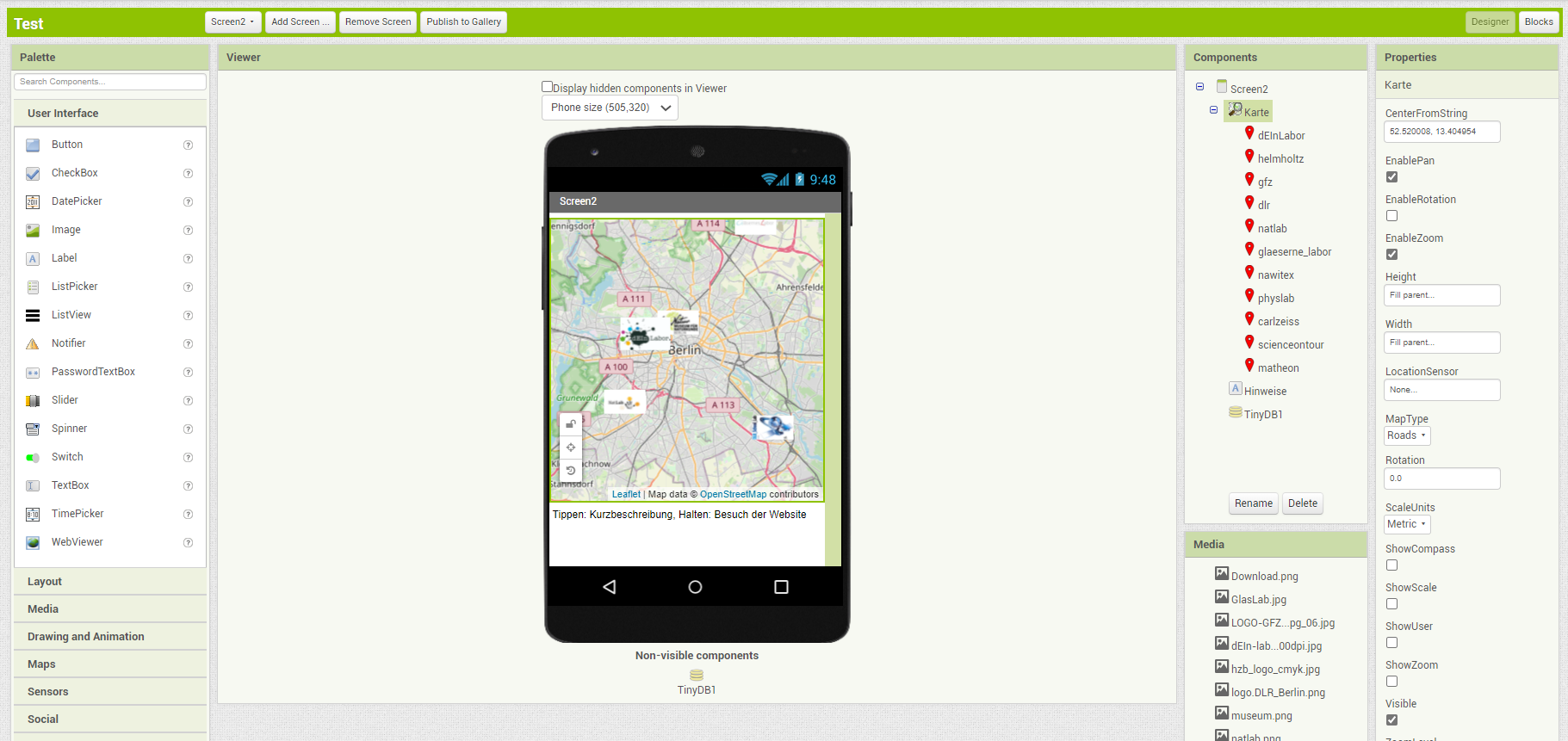
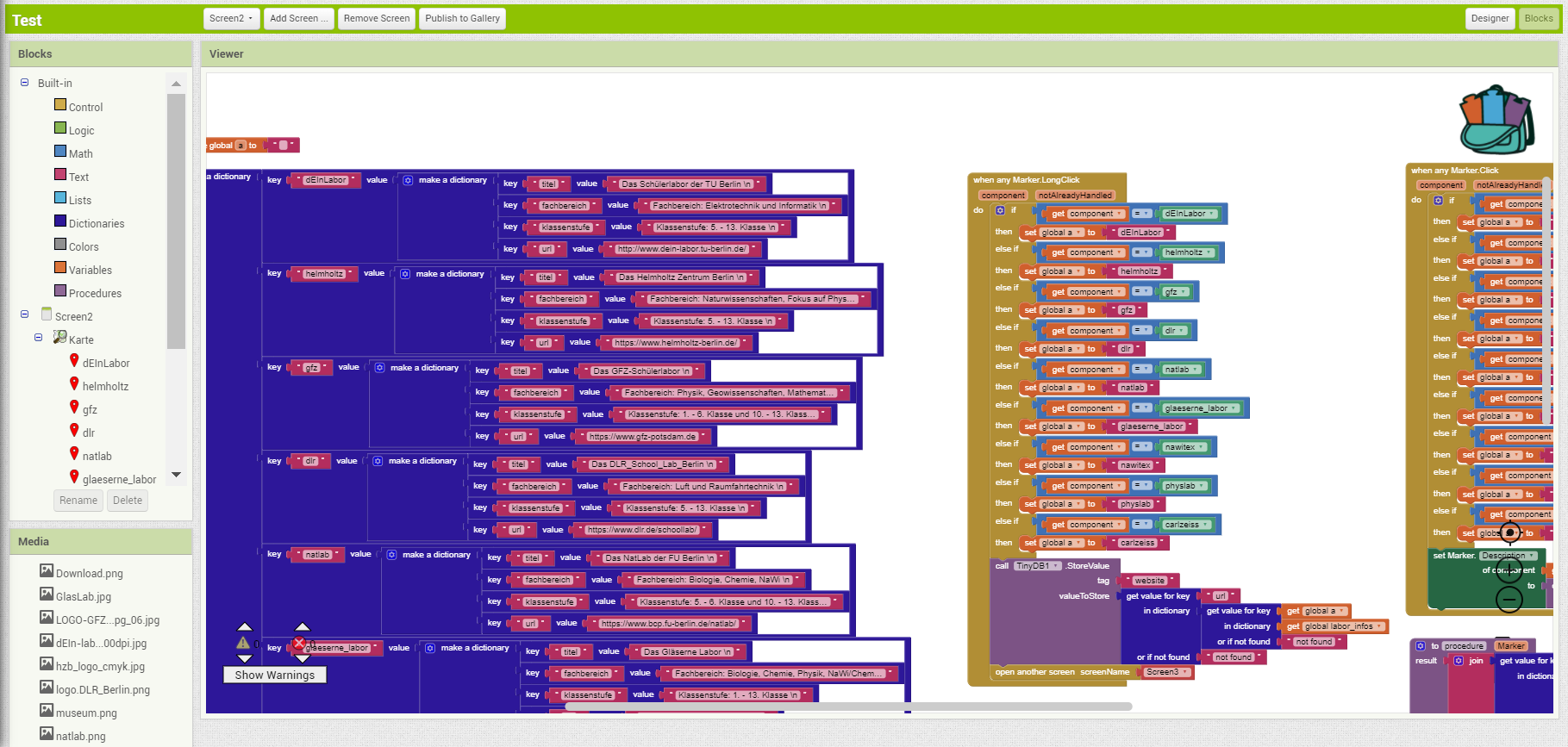
Seen above is one of the more complex examples of a map app that we have worked on, it showed all student labs in Berlin. The special lesson for the students was understanding how databases are created and used, tying each marker to a name, faculty, age to participate and linked website. Other apps that were programmed were: A finger painting app, a whack a mole app and a quiz app about different STEM subjects.
CoSpaces Edu#
CoSpaces Edu is a block based programming language, similar to the previously presented MIT App Inventor. Instead of creating Apps however, students create playable virtual 3D Worlds they can interact with. During the MuM AG we used CoSpaces Edu to give the students a creative outlet to utilize their already learnt programming skills for games and educational worlds. At the end of the learning period we met the students in person at the Technical University of Berlin to build their own VR glasses and experience their VR worlds outside of the computer screen.
Atari Punk Console#